Turny. An AI-powered personalised health discovery system
Turny is a low-cost paid product for people living with chronic conditions, so they never miss out on what matters for their condition. The tool reads thousands of new sources a week and gives the user a personalised update.
Even clinical teams struggle to stay up to date. For patients, it is nearly impossible.
People living with serious or chronic health conditions want the most up-to-date information so they can make the best decisions about their care. However, for most conditions there are over 1,000+ new developments every week across research papers, clinical trials, expert talks, webinars, podcasts, and patient communities.
The challenge was not simply access to information. It was how to continuously surface the most relevant new insights for each individual as their health journey evolves.
We tested the idea with one generic email — before building anything.
We tested this idea early by creating a simple email called “What’s New This Week in Your [insert disease name].” The email was generic and not personalised, yet it consistently achieved very strong engagement:
This led us to design Turny, an adaptable personalised weekly health insight system.
I designed the system 0→1.
I worked closely with my lead engineer to shape system behaviour and architecture, including how health profiles interact with the knowledge dataset and how insights are ranked and surfaced. Throughout development I helped identify edge cases across the insight pipeline and refine the product logic from data ingestion through to personalised insight delivery.
Designing an insight updating system
- Research papers
- Clinical trials
- Expert content
- Patient communities
- Trials and events
- 100k–200k indexed sources
- 10 years historic data
- Structured dataset
- Updated daily
- Condition & context
- Location
- Priorities
- Treatment history
- Personal agents searching location-specific events, trials and providers
- Vector retrieval
- Relevance ranking
- Context weighting
- Summarisation
- Source validation
- Quality moderation
- Index ~10 years of historical health information
- Research papers, trials, expert content, patient communities
- Typically 100k–200k sources per disease area
- ~1,000+ new items indexed weekly
- Source-aware monitoring (research, trials, experts, community)
- Dedicated agents for events, clinical trials, and local updates
- Short onboarding captures condition, priorities, context
- Vector retrieval + ranking models surface relevant evidence
- Continuous discovery without repeated searching
- Prioritise signal quality over input volume
- Deliver first personalised insight during onboarding
- Prompt users to refresh priorities weekly
- Direct links to original sources
- Verbatim quotes and key findings
- Multi-perspective synthesis (research, experts, patients)
- Structured format for complex information
- Insights surfaced proactively each week
- Multi-format delivery: 5-minute audio briefings, weekly email updates and web insight feed
We onboarded users to see impact quickly
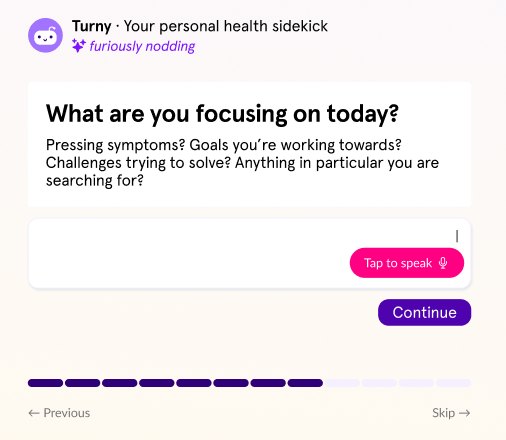
- Only 5 quick-fire onboarding questions
- Simplified onboarding using voice-to-text
- 1st update generated before sign-up to trial
- Deep search of articles relevant to the user’s specifics
- Early indication that the user’s priorities matter!
And provided a weekly cadence of continued insights
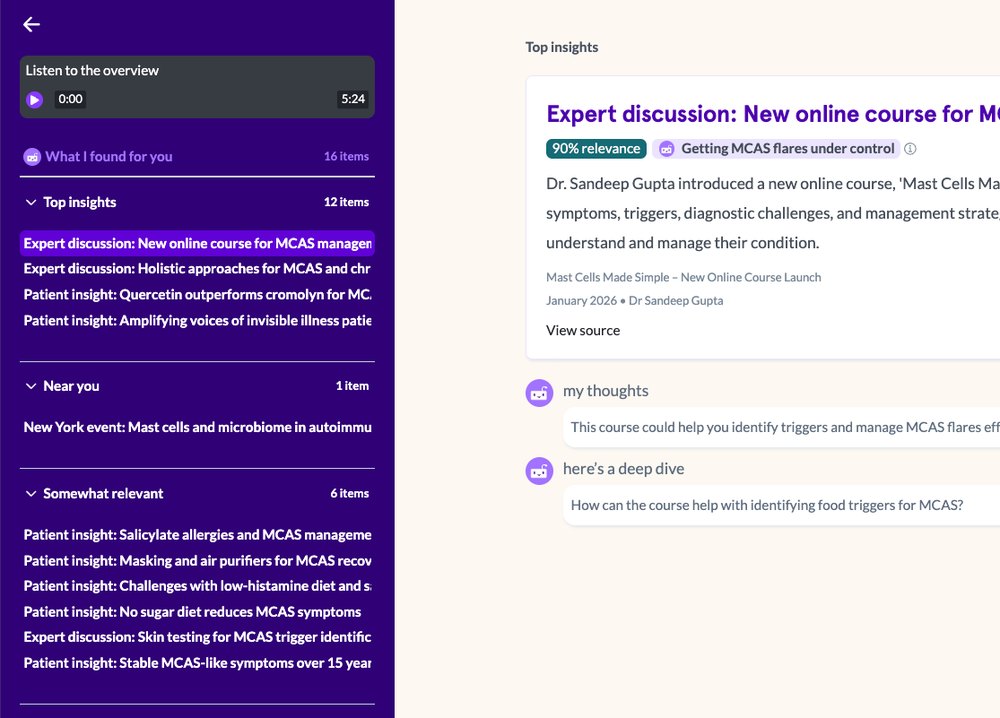
- 10–15 items of high-value relevant information
- Sent same day, same time each week
- Encouraged to provide feedback & update profile
- Multi-modal digestion of the update overview

Product outcomes and key learnings
There have been several consistent patterns in how patients engage with their health updates:
The system evolved from an early simple email with generic health updates into a personalised health insight platform, and is currently in early product launch.
Turnto Deep Dives. A multi-perspective AI system for complex health questions
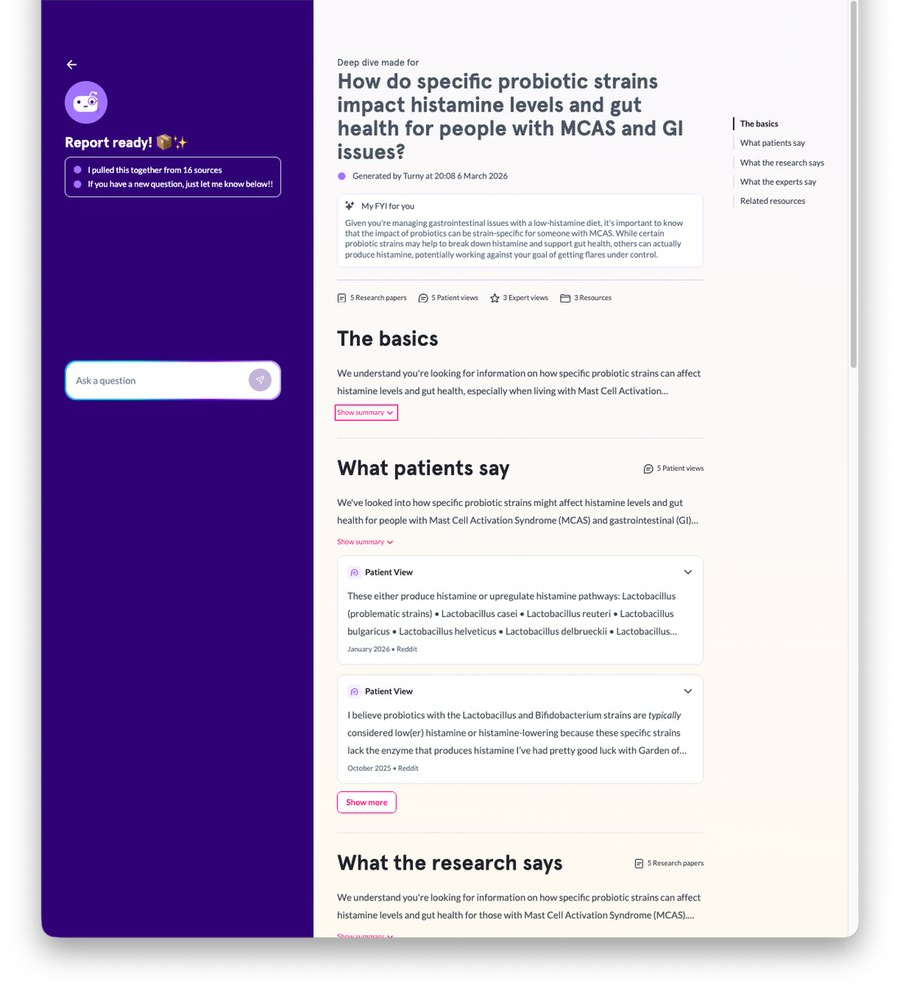
A deep-dive question and answer tool for people living with chronic conditions. Released as organic SEO pages, then included in a paid low-cost package. Answers come from the condition dataset; include research, patient, and expert views; prioritise new information; and take into consideration the user’s health profile and current condition state.
People researching complex health questions rarely rely on a single source.
Important insights are scattered across many places, including:
Today these sources exist in separate ecosystems. Most information systems prioritise academic sources while ignoring expert discussions and patient experiences, and do not optimise for recency.
As a result, people are forced to piece together fragmented information across many platforms, while remaining vulnerable to misinformation or oversimplified advice.
All sources matter. And recency matters.
1. All sources matter: valuable insights can emerge from research, expert discussions, and patient communities. What patients are experiencing in real life often takes years to appear in formal research, yet these experiences can highlight emerging treatment patterns or side effects much earlier — alongside the importance of reliable evidence next to these patient discussions.
2. Recency matters: patients care deeply about what is happening right now. What a world leader said about a new treatment on a podcast yesterday matters.
I led the design and development from concept to early deployment.
The project required bridging AI capabilities, medical information systems, and user needs in complex health decision-making.
Designing a multi-perspective AI deep-dive system
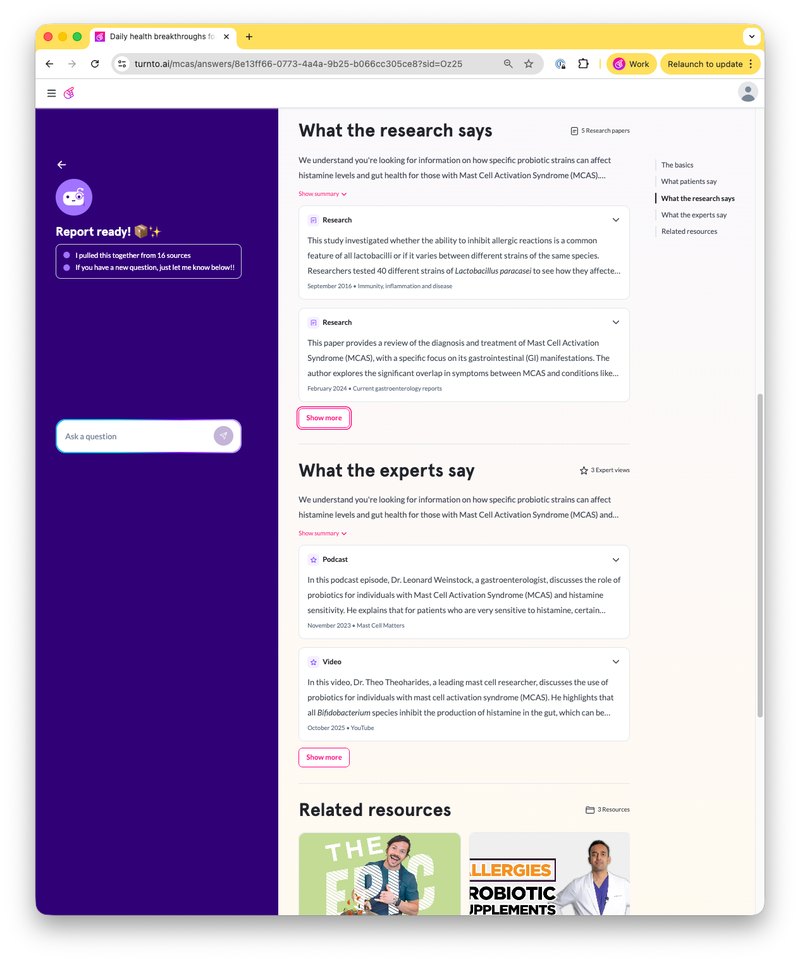
When a user asks a health question, the system does not immediately generate an answer. It first captures key context signals, then generates a structured deep-dive report by retrieving evidence from a structured health knowledge index — using semantic retrieval and ranking models that prioritise relevance and recency.
Demographics
Duration / severity
10 yrs historic data
Structured dataset
Relevance ranking
Context weighting
Source validation
Quality moderation
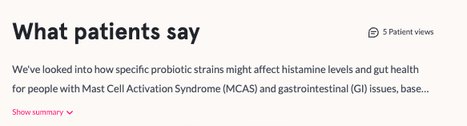
Patient perspectives
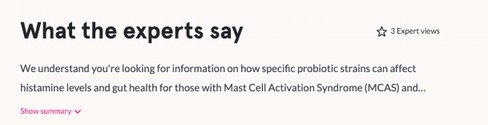
Expert insights
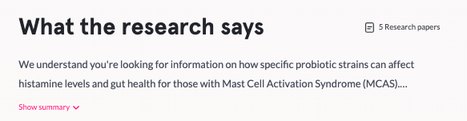
Research findings
Resources
A different approach to Q&A
Health questions rarely have a single definitive answer. Research may be incomplete, expert opinions evolve, and patient experiences often surface emerging patterns years before they appear in formal studies.
Instead of compressing everything into one summary, the system was designed to surface multiple perspectives and allow users to explore the evidence themselves. In some cases the system explicitly acknowledges uncertainty.
Product challenges overcome
Product outcomes and key learnings
Thousands of structured health pages published, creating an organic acquisition channel for the whole platform. Direct source navigation — jumping to the exact moment in a podcast — measurably increased trust and exploration.
An ML treatment analysis system. Research grant
A project to categorise and share a comprehensive treatment resource for the cerebral palsy patient community — using ML to categorise, then rank and evaluate evidence for specific treatments, and UGC from patients and professionals to share more comprehensive information.
For most conditions, no comprehensive list of treatments exists.
In cerebral palsy, families are typically introduced to a small number of therapies through their clinical care team. Yet across research literature, specialist clinics, and emerging therapies, hundreds of treatments exist — scattered across academic papers, conference talks, and clinical practice, with little clarity about how widely a treatment has been studied or how strong the evidence may be.
The challenge was not simply accessing research papers. The deeper problem was the absence of a structured treatment taxonomy — medicine rarely maintains a comprehensive, up-to-date map of treatments for a condition. At the same time, families evaluating treatments value multiple perspectives: research evidence, expert interpretation, and patient experiences each provide different signals.
I founded and led the development of this project.
After attending a leading cerebral palsy research conference and identifying the gap in how treatment knowledge was organised, I designed the concept for a system that could map the full treatment landscape for the condition. I then assembled the project team and secured research funding to build the system.
My motivation for this work was also personal. I am the parent of two children with cerebral palsy, which gave me direct insight into how difficult it can be for families to discover and evaluate treatment options.
System design: mapping the treatment landscape
The system combined research evidence, expert insight, and patient experience: it analysed 32M research abstracts, identified 250+ treatments, and organised them into a structured taxonomy so families could explore treatments by both type and treatment goal.
- 32M PubMed abstracts
- Clinical treatment datasets and registries
- Existing CP treatment lists
- Community treatment reviews & clinician commentary
- PhD students & clinicians fact-checking
- ML model trained on 32M PubMed abstracts
- Treatment identification model + evidence extraction
- Study signals: type, size, outcomes, evidence strength
- 99% accuracy identifying treatment names
- Evidence ranking model
- Evidence strength indicators
- Classification aligned with GRADE-style framework
- Treatment taxonomy: type & goal
- Structured treatment pages
- Summaries curated by PhD researchers
- Patient treatment reviews
- Search by treatment type or goal
Machine learning models analysed 32M PubMed abstracts to identify cerebral palsy treatment studies and extract key signals such as study type, participant size, outcomes, and effectiveness indicators. To support model training and validation, three practising physicians were engaged part-time to review abstracts and help define classification criteria aligned with the GRADE evidence framework.
This allowed the system to translate complex research literature into clear evidence-strength indicators for users.
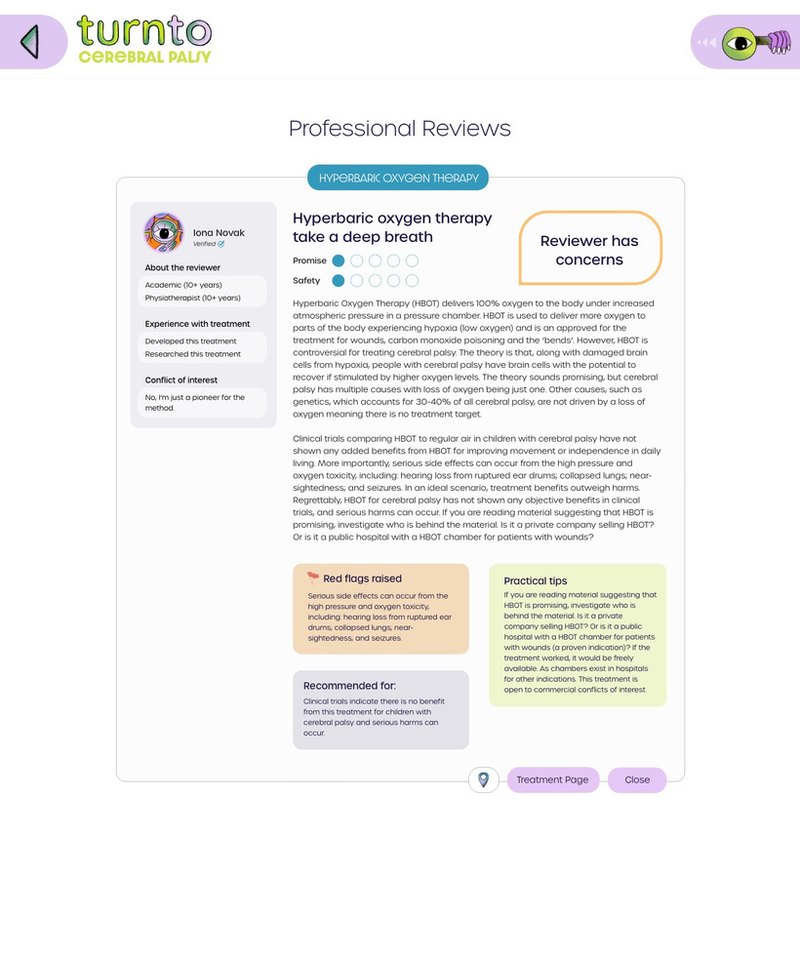
Product experience: exploring the treatment landscape
The platform mapped more than 250 cerebral palsy treatments into a structured taxonomy, so users could explore therapies by both treatment type and treatment goal — discovering treatments beyond those typically introduced in clinical care.
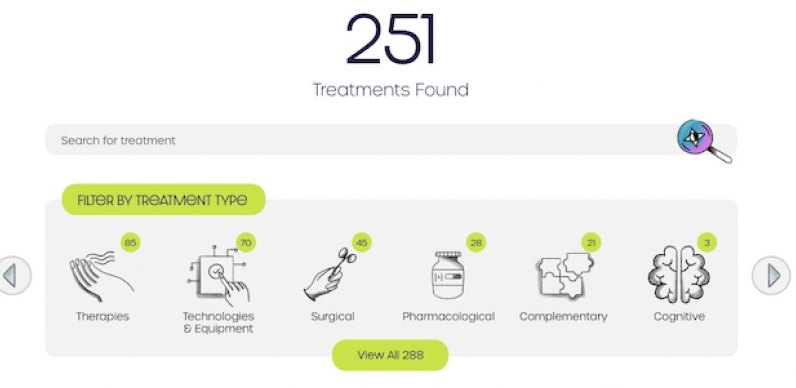
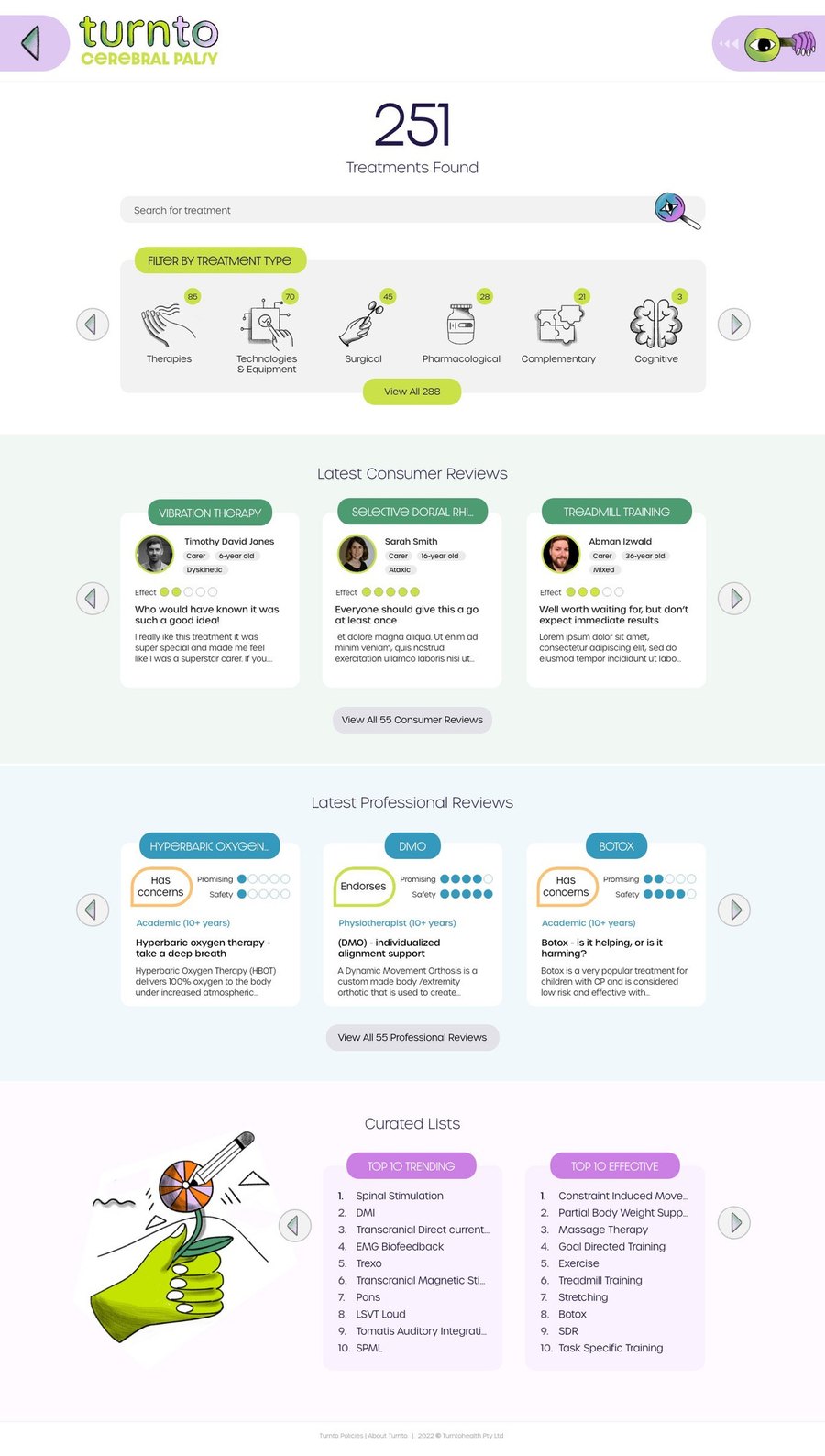
Each treatment page combined research evidence indicators, expert interpretation, and patient treatment experiences to support more informed decision making.
Product outcomes and key learnings
Turnto. A habit-forming daily health intelligence app
Turnto is a free, community-powered app delivering daily ideas, insights, and support for people living with chronic health conditions. Went live to 3 conditions and onboarded 10K users, grown organically.
People living with chronic conditions run out of ideas.
Three things we knew going in
I led the product from concept to launch.
I worked closely with engineering on product behaviour and feature design, translating user needs into practical mobile experiences.
System design for daily content delivery
- In-app patient creation (text & video)
- Polls, comments, AMAs
- New studies and trials
- Research summarisation
- AI-assisted moderation
- Community operations model
- Moderation model
- ~50% of patient content posted directly
- Same time every day
- Swipeable stack of ideas
- Then: “you’ve done enough for today”
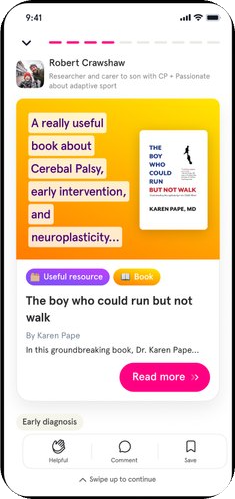
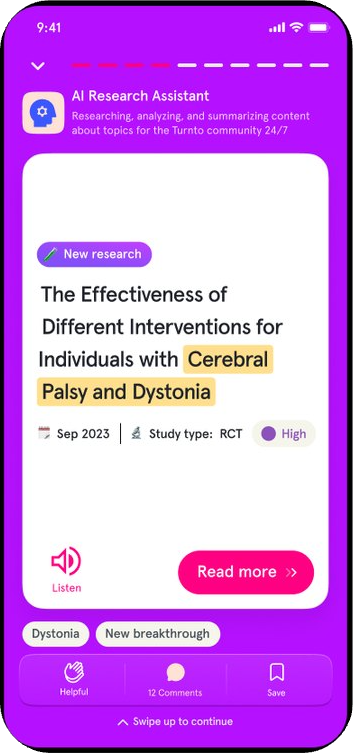
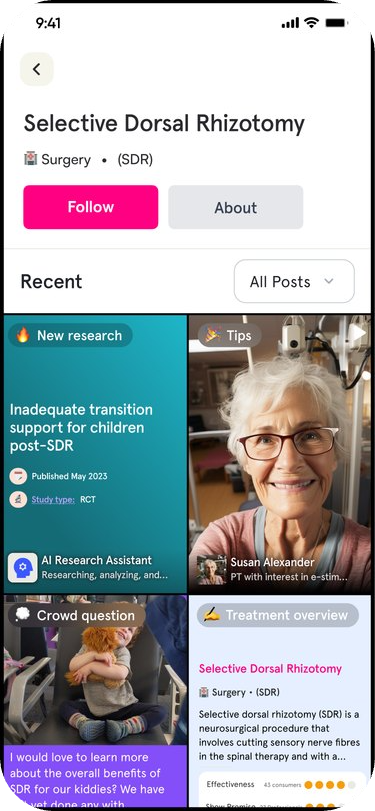
An app that tells you to stop
Product outcomes and key learnings
This product showed strong product-market-fit signals — and clarified the operational limits of a high-touch daily model:
I see problems and I build things to solve them.
Over the past six years I've launched five AI health products used by 100,000+ people, evolving from early NLP research to consumer platforms and agentic systems. Before tech, a decade in aid and development taught me why projects fail when they're built far from the people they serve. I build close.
Selected work→
Systems built from zero
Here are four case studies of things I’ve built, walking through the problem, the AI system we designed, and some of the outcomes.
Turny. An AI-powered personalised health discovery system
For people living with chronic conditions, so they never miss what matters. Turny reads the 1,000+ new things published in a condition each week and delivers one personalised update — email, web and 5-minute audio.
Turnto Deep Dives. A multi-perspective AI system for complex health Q&A
Structured reports that keep research, expert and patient perspectives separate — with uncertainty stated plainly and every claim traceable to its source.
An ML treatment analysis system. Research grant
ML models over 32 million biomedical abstracts to map every treatment for cerebral palsy: 251, where families typically knew five.
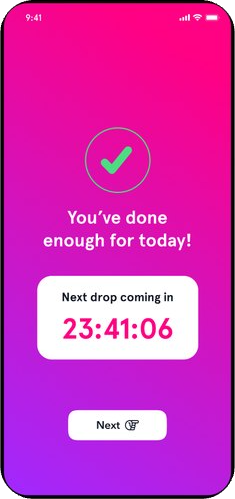
Turnto. A habit-forming daily health intelligence app
One daily drop of practical ideas — community, experts and research together — then “you’ve done enough for today.”
How I like to build
Side projects.
Here are some things I’m working on, playing with and exploring. I love making and talking about all things health, AI and impact, and a lot of it comes from my own lived experience of why this technology matters for solving real problems today.
What's got me excited right now
Talking about AI, health and human agency
Mostly about what becomes possible when we build technology from the problem up.
What happens when a patient refuses to wait years for science to translate? The talk covers the human cost of fragmented health information, the moral stakes of not using AI in medicine, and what changes when patients get agents instead of search boxes. Delivered at healthcare and pharmaceutical conferences, including internationally in Europe.
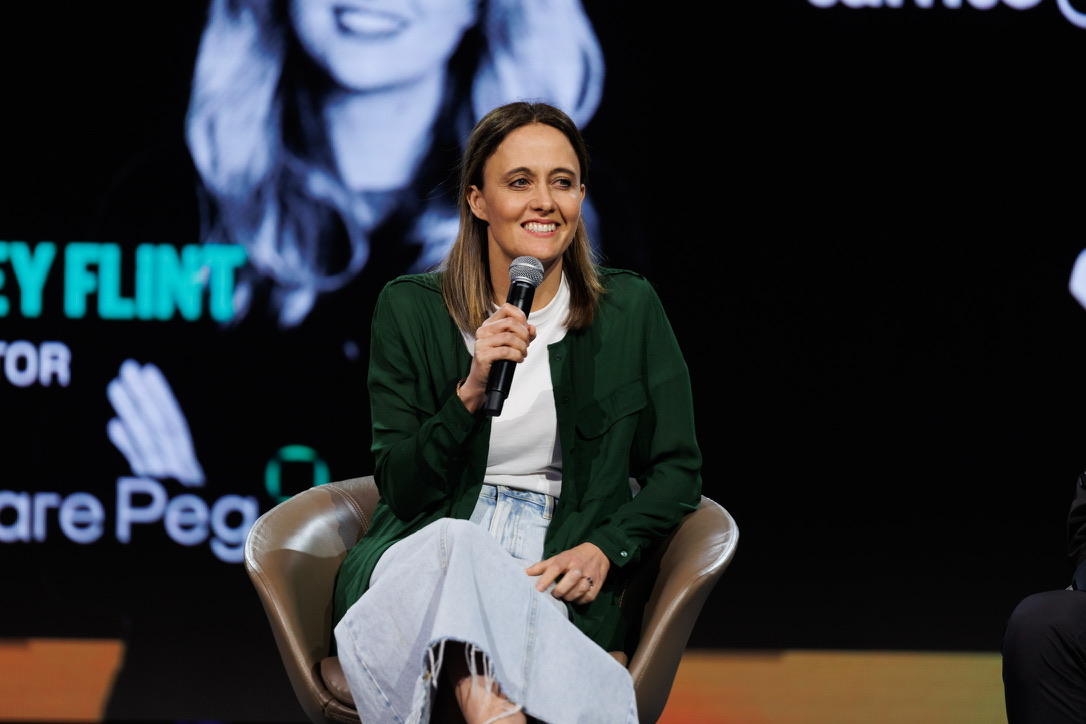
Featured guest on 20+ podcasts across Parkinson’s, Long COVID, stroke and chronic illness communities, and creator of a 50,000-person health community reaching millions of views.
Problems I saw, things I built
Since I was 15, the gap between noticing a problem and doing something about it has been as short as I can make it.
The pattern starts early
Close to the problem: a decade in aid and development
The turn into AI: every product, one problem at a time